Marine
Boat wraps: waterline, fenders and contact zones
Plan marine vinyl boundaries around water exposure, docking contact and hardware before approving hull graphics or a color change.
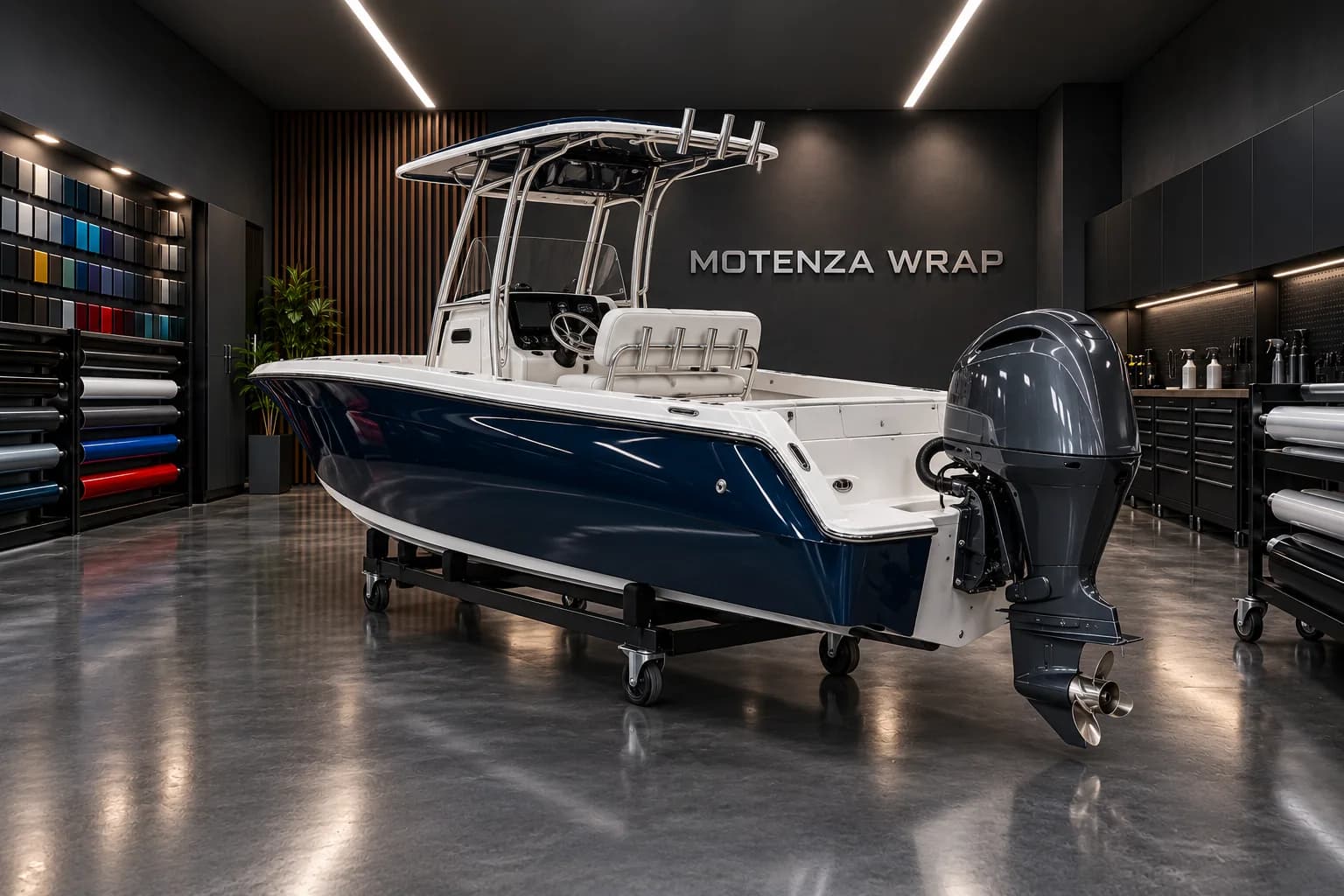
A boat-wrap proposal should identify where the film will be used and what exposure it will face. Continuous immersion, fender abrasion and hardware edges are different conditions. Do not assume every visible part of the hull can receive the same film treatment.
Mark the intended boundary
Discuss the operating waterline and the areas proposed for graphics. Ask for the selected product's permitted marine uses rather than extending an automotive material claim to submerged surfaces. The design should show its stopping points clearly.
Map repeated contact
Fenders, dock lines, trailer supports and equipment can rub the same area repeatedly. Identify those zones before installation. A graphic may need a different boundary or a practical maintenance plan; adding film does not eliminate physical abrasion.

Resolve access and fittings
Cleats, rails, trim and existing lettering affect both the design and installation. Confirm what can be accessed or removed and who is responsible for that work. Avoid a proposal that assumes hidden surfaces are reachable without checking the vessel.
Plan care and later repair
Keep material and artwork records, inspect exposed edges and use the approved cleaning method. A local damaged area may require a defined replacement section, with color and design matching considered. Motenza can discuss the installation around actual vessel use and condition before finalizing coverage.
Before your next step
- Identify immersion and splash exposure separately.
- Mark fender, line and trailer-contact areas.
- Confirm access and product-specific marine suitability.